
Humanitarian response · Completed
KIA DROUGHT RESPONSE
Drought Response in Turkana South
- Status
- Completed
- Location
- Kaputir and Lobokat wards, Turkana South
KIA DROUGHT RESPONSE
Drought Response in Turkana South
The intervention aimed to reduce the effects of prolonged drought for 500 vulnerable households in Kaputir and Lobokat wards, Turkana South.
Purpose and approach
Our response
Working with communities
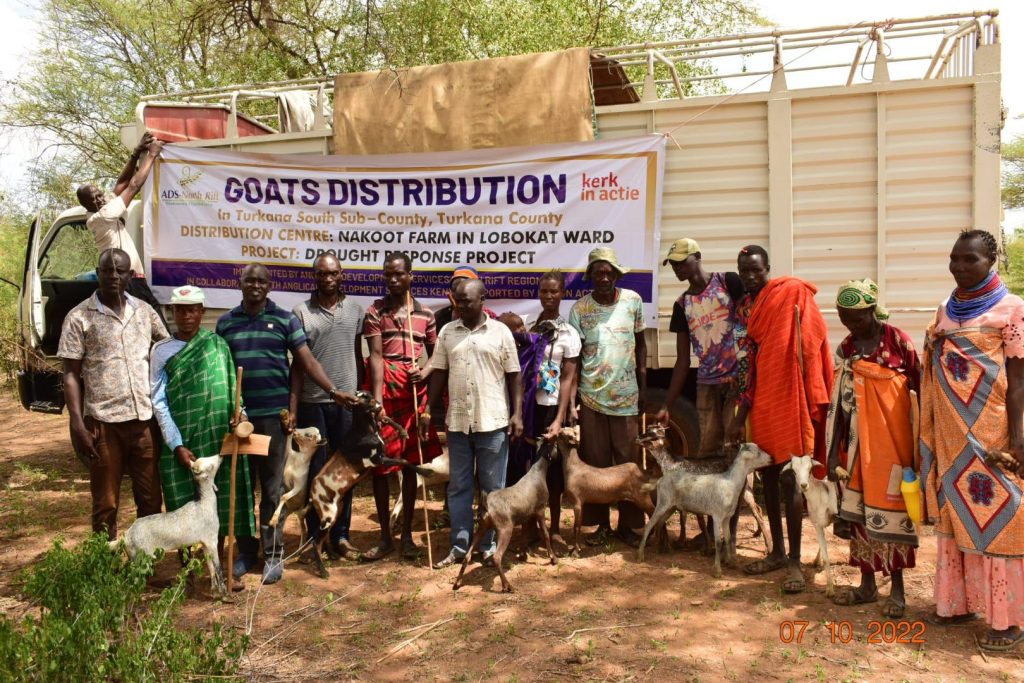
Activities included drought-resistant seeds for vulnerable households, restocking goats, rehabilitating shallow wells, and training water management committees and communities using the Community Led Total Sanitation (CLTS) approach.
Supported by Kerk in Actie (KIA) through ADS Kenya.
People reached and progress
Achievements
- Households trained and supplied with seeds
- 500
- Households restocked with a goat
- 138
- Shallow wells rehabilitated
- 10
All 500 targeted households (100%) were trained in good agronomic practices and enhanced food production by adopting climate-resilient practices.
All 500 households received seeds before the long rains, including green grams, sorghum, kales, tomatoes, spinach and cowpeas.
All targeted households had increased food access through drought-resistant, early-maturing crops.
138 households received one goat each, restocking animals lost to the prolonged drought.
Training on livelihood diversification continued, strengthening participants’ capacity to set up and manage diversified enterprises.
Ten shallow wells were assessed and rehabilitated. All are functioning except one that dried up in the prolonged drought.
Ten water user committees of 20 members each were formed and trained. 150 members (75%) took part, 57 women and 93 men, representing people with disabilities, schools, health facilities and local leaders.
CLTS training was planned to follow the training of water committee members.
All 500 target households were reached with COVID-19 prevention messages through all project activities.
Continue the work with us
Partner with us
Funding, technical expertise and partnerships can help communities sustain this progress.